


Why Are There So Damn Many Skateboard Wheels?
Buying skateboard wheels used to be easy.
You needed wheels.
You bought wheels.
You put them on your board.
You went skating.
Done.
Now?
Apparently, you need a degree in materials science first.
There are different sizes. Different hardnesses. Different shapes. Different formulas. Different contact patches. Different cores. Different finishes. Different technologies that apparently make one round piece of urethane significantly better than another round piece of urethane.
And every skateboard brand seems determined to introduce another wheel that is somehow completely different from the 14 wheels they already sell.
At this point, choosing wheels feels less like shopping and more like applying for a job in materials science.
You just wanted to skate a curb.
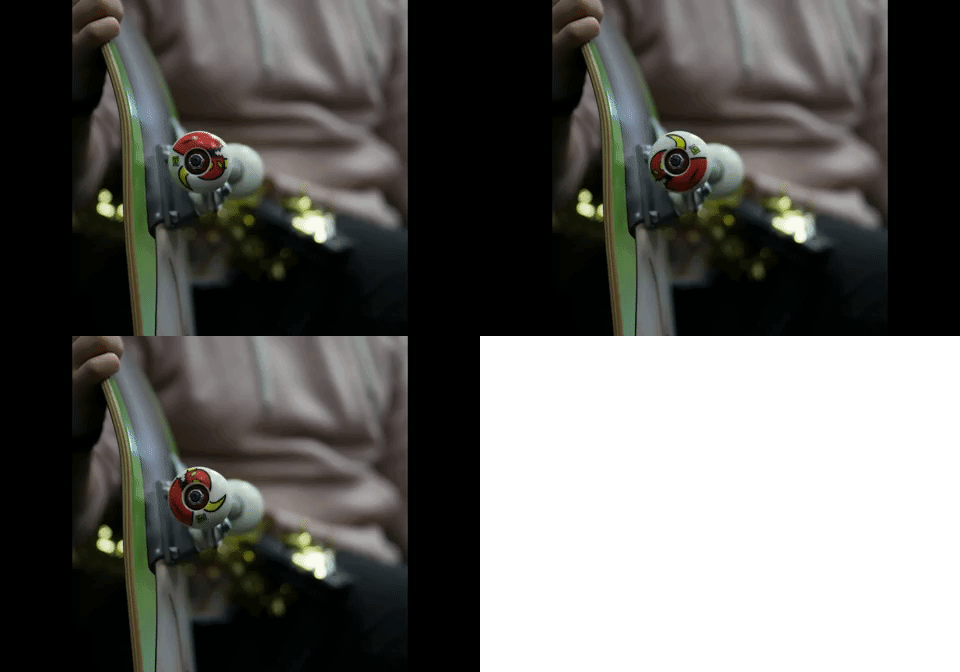
The 54mm Problem
Let's say you need new wheels.
Easy.
You decide you want 54mm.
Except now you have options.
54mm 99A.
54mm 101A.
54mm 97A.
54.5mm 99A.
53.5mm 101A.
Something with a wider contact patch.
Something with a narrower contact patch.
Something conical.
Something classic.
Something "wide."
Something "fast."
Something with a special formula.
And probably something called Super Ultra Pro Urethane X™.
You stare at the product page.
You close the tab.
Your old wheels suddenly don't look so bad.
Apparently, Urethane Has Become Rocket Science
Every wheel company eventually develops a revolutionary new formula.
The wheel is still round.
But this time, it's faster.
It has more rebound.
It has better control.
It has improved slide characteristics.
It has enhanced durability.
It somehow has more grip and less grip at the same time.
And honestly, some of the marketing starts sounding like skincare.
New advanced formula.
Improved performance.
Maximum response.
Next-generation technology.
Bro.
It's a wheel.
We put four of them on a piece of wood and jump down stairs.
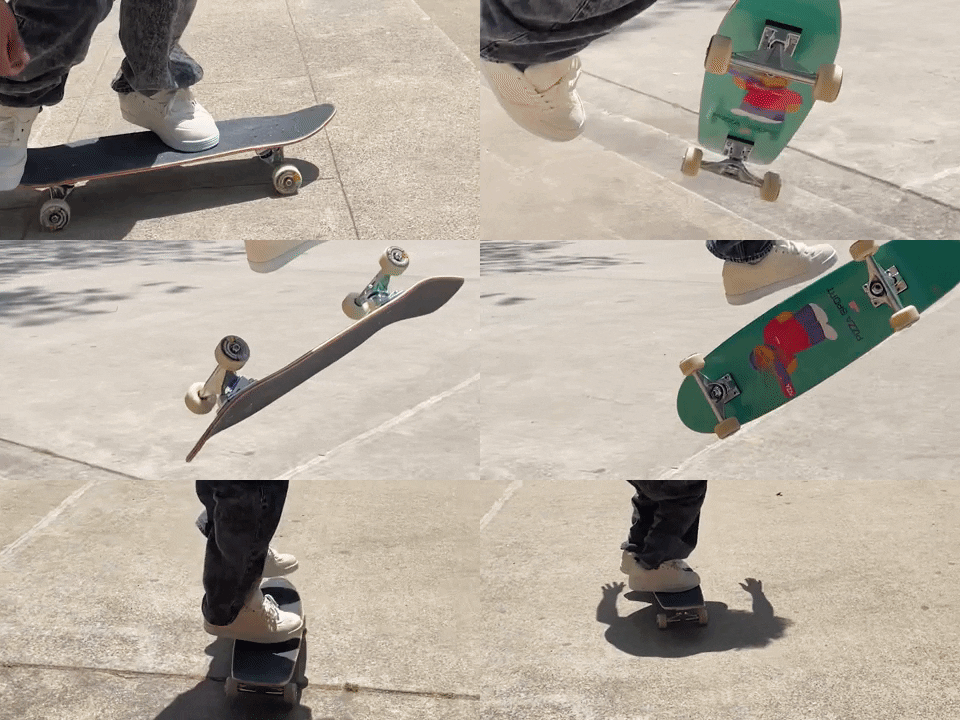
Then You Have To Pick The Hardness
This is where things get even more confusing.
For years, skateboarders have been using the basic hardness number as one of the easiest ways to decide what kind of wheel they want.
Soft wheels?
More grip.
Hard wheels?
More slide.
Simple.
Except now you've got 97A, 99A, 101A and everything in between.
And different brands can make wheels with the same advertised hardness feel noticeably different anyway.
So you end up reading descriptions like:
"Our new formula provides the speed of a harder wheel with the grip and comfort of a softer wheel."
Excellent.
You've just invented a wheel.
Do We Actually Need All These Options?
Here's where things get complicated.
The answer is probably yes and no.
Different wheels genuinely feel different.
If you're skating rough European streets, you might want something completely different from someone spending all day on perfectly smooth indoor concrete.
A transition skater might have completely different preferences from someone skating tiny crusty ledges.
Wheel size matters.
Hardness matters.
Shape matters.
Contact patch matters.
And experienced skaters can absolutely feel those differences.
So having options isn't necessarily a bad thing.
The problem is that the average skater doesn't need to understand every single option before buying wheels.
You can know roughly what you like and get on with your life.

The Wheel Industry Has A Problem
It's not really that brands make too many wheels.
It's that they make every wheel sound like a scientific breakthrough.
At some point, you start wondering if the difference between two wheels is actually noticeable or if you're just being psychologically manipulated by a very good product description.
You buy a new set.
They feel amazing.
Of course they do.
They're new.
Your old wheels have been scraping along Berlin sidewalks for six months.
The new ones are basically four tiny miracles.
Then you skate them for three months.
Suddenly you're convinced they don't have enough rebound.
So you buy another set.
The cycle continues.
Congratulations.
You're now financially supporting the global urethane economy.
The Same Wheel Can Feel Completely Different
There's another thing brands can't really solve for you.
Your local ground.
A wheel that feels incredible on smooth skatepark concrete might feel terrible on rough asphalt.
A hard wheel can be fast and slide beautifully on the right surface.
Put it on horrible street ground and suddenly every pebble feels like a landmine.
This is why asking:
"What's the best skateboard wheel?"
is basically the wrong question.
The better question is:
"What's the best skateboard wheel for what I actually skate?"
Which is considerably less exciting.
But much more useful.

Beginners Probably Don't Need To Overthink It
This is where the whole thing gets ridiculous.
Imagine you're buying your first skateboard.
You barely know how to push.
You definitely don't know what a backside tailslide is.
And someone hands you a wheel chart containing approximately 400 combinations of size, hardness, shape and formula.
You're standing there thinking:
"I just want to learn how to ollie."
You don't need to know everything.
Get a sensible wheel size.
Pick a hardness that suits the surfaces you're going to skate.
Put them on your board.
Go outside.
The wheel isn't going to land the trick for you.
Unfortunately.
But Choice Is Still A Good Thing
It's easy to make fun of the endless wheel options.
And we should.
Because some of the marketing is hilarious.
But having more choices has also made skateboarding better.
There are wheels for rough streets.
Wheels for smooth parks.
Wheels for transition.
Wheels for cruising.
Wheels designed specifically for different types of skating.
Skaters can experiment and figure out what actually works for them.
That's a good thing.
The problem only starts when choosing between them becomes harder than actually skating them.

Nobody Has Ever Landed A Trick Because Of Their Contact Patch
This is probably the part the wheel companies don't want to hear.
Nobody lands a perfect trick and immediately thinks:
"Thank god I chose the 54mm version with the slightly wider contact patch."
They think:
"Holy shit."
That's the point.
Your wheels matter.
But eventually, you have to stop researching them.
There is always another formula.
Another shape.
Another hardness.
Another "new and improved" version.
Another wheel that promises to change everything.
At some point, you have to put the phone down.
Put the wheels on your board.
Go skate.
Because the perfect wheel probably doesn't exist.
And even if it does, you're probably going to flatspot it anyway.
Now stop researching wheels and go skate.