
Maybe Skateboarding Is Getting Bored Of Skateparks
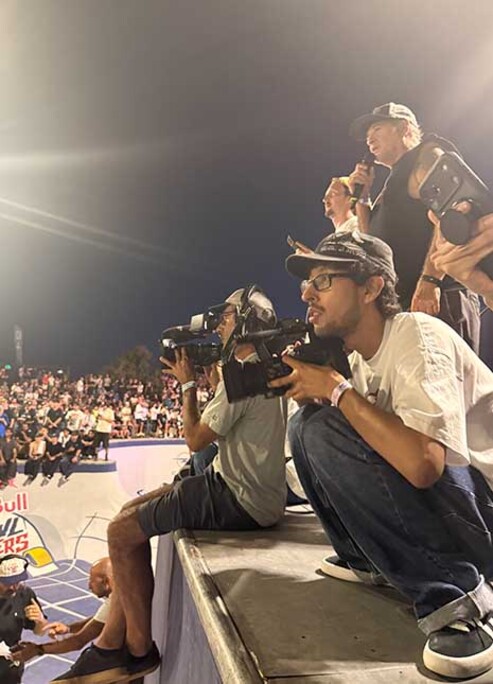
Skateboarding spent years trying to convince the world that it was a real sport.
Then it finally succeeded.
Now we have Olympic medals, professional judging, giant contest courses, livestreams, commentators explaining what a switch backside 270 actually is, and teenagers doing tricks that make most adults question whether their joints are working correctly.
Good for skateboarding.
Seriously.
More people watch it. More kids skate. More money goes into the industry. More skaters get opportunities.
But after watching someone do a 900thousand-degree combination down a perfectly designed stair set, there is still something incredibly satisfying about watching a guy find a terrible curb behind a supermarket and spend two hours trying to ollie onto it.
Because skateboarding has a strange problem.
The better it gets at looking like a sport, the more you remember why it was never really one.
The Street Was Never Supposed To Be A Course
A skatepark gives you obstacles.
The street gives you problems.
The difference is important.
At a skatepark, the rail is there because someone put it there.
On the street, you have to find the rail.
And it might be rusty.
The ground might be terrible.
There might be a giant crack directly underneath it.
A car might be parked in front of it.
Someone might have decided to install a flower pot exactly where your landing should be.
And somehow that makes it better.
Because now you're not just skating.
You're solving a stupid little architectural puzzle.
You look at a staircase and think:
"Could I?"
You look at a wall and think:
"Definitely not."
Then you come back ten minutes later:
"Actually..."
That's street skating.
Contest Skateboarding Has One Tiny Problem
Everything is too good.
Hear me out.
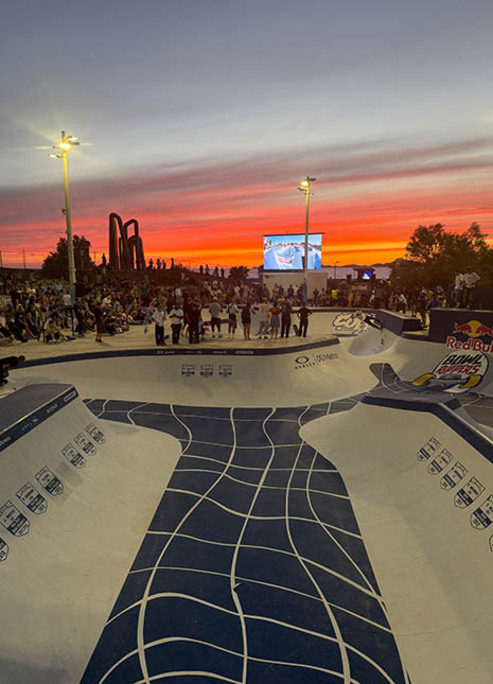
Modern contest courses are insane.
Perfect transitions.
Perfect ledges.
Perfect rails.
Perfect surfaces.
There are usually no mysterious holes waiting to destroy your front truck.
Which is probably good for the athletes.
But it removes one of the best things about street skating:
Nothing is guaranteed.
A contest course says:
Here is the obstacle.
Here is the run.
Here is the time.
Go.
The street says:
Here's a random piece of concrete.
Good luck.
Nobody Gives You Points For Finding A Weird Spot
This is one thing contests can never really replicate.
Imagine spending three hours walking around a city looking for spots.
You pass 47 completely useless pieces of architecture.
Then you see something.
A weird bank.
A tiny ledge.
A handrail that looks almost skateable.
You stop.
You stare at it.
Your friend stares at it.
Nobody says anything.
Then someone says:
"I think you could..."
And that's it.
The entire afternoon is gone.
That's one of the best parts of skateboarding.
You can leave your house without knowing what you're going to skate.
There isn't another major sport where part of the competition is basically:
Can you find something worth doing?
The DIY Spirit Never Really Went Away
DIY spots are basically skateboarding's way of saying:
"Fine. We'll build our own thing."
Don't like the skatepark?
Build something.
Don't have a transition?
Pour one.
Don't have a ledge?
Make one.
Don't have permission?
Well...
That's where things get complicated.
DIY isn't necessarily better than a proper skatepark.
It's just different.
A skatepark is infrastructure.
A DIY spot is personal.
Someone mixed that concrete.
Someone carried those bricks.
Someone spent their Sunday digging a hole instead of doing something sensible.
You can feel that when you skate it.
And Then There's The Internet
Here's another reason street skating isn't disappearing.
You don't need a magazine.
You don't need a TV network.
You don't need a contest.
Someone can film a 15-second clip on an iPhone, upload it from the side of the road, and suddenly 300,000 people are watching a person ollie over something that was never supposed to be jumped over.
The internet actually makes weird street skating easier to discover.
A perfect contest run might be impressive.
But a completely ridiculous street clip can be impossible to forget.
Especially when the caption is something like:
"Found this behind a Lidl."
Maybe Skateboarding Doesn't Need A Rebellion
This is where the whole "post-Olympics" idea gets slightly weird.
Because there doesn't really need to be a rebellion.
Olympic skating can exist.
SLS can exist.
Huge skateparks can exist.
DIY spots can exist.
Street skating can exist.
A 14-year-old can spend Saturday practicing for a contest and Sunday trespassing into a parking garage looking for a ledge.
Nobody has to choose.
That's the beautiful part.
Skateboarding has always been terrible at following its own categories.
It's a sport.
It's not a sport.
It's competition.
It's messing around.
It's exercise.
It's art.
It's hanging out with your friends for six hours and somehow doing approximately twelve minutes of actual skating.
All of those things can be true at the same time.
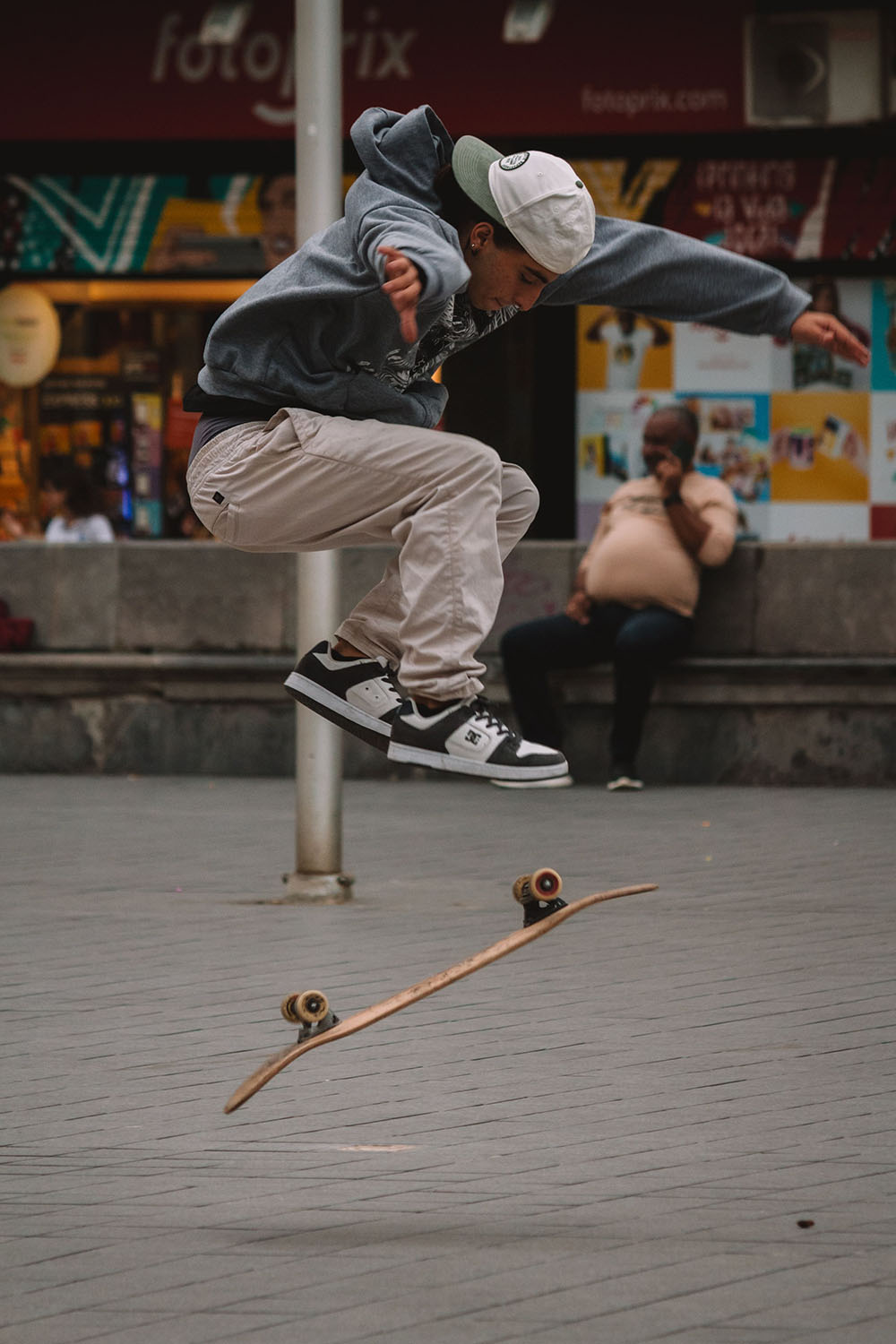
The Best Spot Might Still Be The One Nobody Built
Maybe that's why street skating still matters.
Not because it's more authentic.
Not because contests are fake.
Not because skateparks are ruining skateboarding.
Those arguments are boring.
Street skating matters because discovery is fun.
Finding something nobody else has skated.
Seeing an obstacle differently.
Turning a piece of architecture into a trick.
Getting kicked out.
Coming back another day.
Trying something stupid.
Landing it.
Or not landing it.
And then telling everyone about the spot anyway.
No judging panel.
No scoreboard.
No announcer.
Just four wheels and a questionable decision.
Maybe skateboarding doesn't need to go back to the street.
It never left.
It was just busy collecting Olympic medals on the way.