

Should An 11-Year-Old Be Competing Against Skateboarding Legends?
Imagine spending 20 years of your life mastering your sport.
You train. You travel. You deal with injuries. You build your career. You become one of the best skateboarders in the world.
Then you show up at the X Games and your biggest competition is an 11-year-old who still has homework tomorrow.
Welcome to modern skateboarding.
At the X Games Chiba 2026, young skaters competed alongside established professionals in events like vert and park. And while seeing kids push skateboarding forward is one of the coolest things about the sport, it also raises an uncomfortable question:
Is it actually fair for children and adults to compete against each other?
Because the conversation usually focuses on protecting the kids.
But what about the adults?
The Strange Advantage Of Being Young
Skateboarding is one of the few sports where being young can actually be a major advantage.
Kids are lighter.
They are more flexible.
They recover faster.
And maybe most importantly:
They are fearless.
An 11-year-old might throw themselves into a trick without thinking twice.
An adult skater might have a completely different calculation going through their head:
“How long will my ankle hurt if this goes wrong?”
“Can I still work next week?”
“Is this worth another injury?”
That doesn't mean adults are scared.
It means they have experience.
They know what a serious slam feels like.
They know that bodies don't always recover the way they used to.
The Adult Skater’s Disadvantage
A professional skater in their late 20s or 30s has something a child doesn't have: experience.
They understand competition.
They know how to build a run.
They know how to handle pressure.
They have spent years developing their style.
But physically?
They might be competing against someone with a completely different body.
A young skater can bend, twist, and move in ways many adults simply cannot.
The same trick can literally require different levels of physical effort depending on your age.
But Isn’t That What Makes Skateboarding Special?
This is where the argument gets complicated.
In most sports, age divisions exist for a reason.
A 12-year-old football player usually doesn't compete against professional adults.
A teenage boxer does not fight a heavyweight champion.
But skateboarding has always worked differently.
The idea has always been simple:
If you can do the trick, you can do the trick.
Nobody cares how old you are.
The 13-year-old at the local park who destroys everyone gets respect immediately.
Skateboarding has always rewarded ability over age.
The Problem With Creating Separate Divisions
Would youth and adult categories make competitions more fair?
Probably.
But it could also remove some of the magic.
One of the most exciting things about skateboarding is seeing someone young challenge established legends.
The unknown kid showing up and changing the entire sport is part of skateboarding history.
The sport has always been built around outsiders.
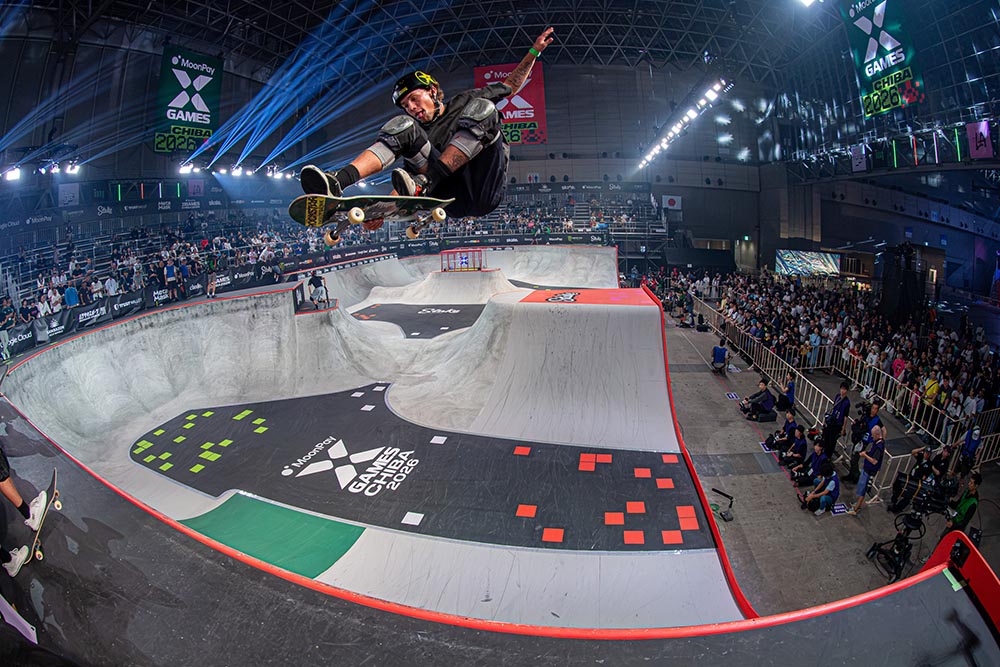 Photo: X Games
Maybe The Real Question Is Not Age
Maybe the question isn't whether kids should compete against adults.
Maybe the question is whether competition formats need to catch up with how skateboarding has evolved.
Skateboarding today is more professional than ever.
There are younger athletes, bigger events, more money, and higher expectations.
The sport is growing up.
And maybe that means some old ideas need to be reconsidered.
Skateboarding Will Always Be Weird
The truth is, there is something beautiful about an 11-year-old standing next to a 26-year-old legend and both trying to do impossible tricks.
It makes no sense.
And that's very skateboarding.
The board doesn't care about age.
It doesn't care how old you are, how long you've been skating, or how many injuries you have.
It only cares what happens when you land.
Maybe the answer isn't separating generations.
Maybe it is accepting that skateboarding has always been a little unfair, a little strange, and completely different from every other sport.
And that's exactly why we love it.